
Last updated November 24, 2026
 Sweep & inspection
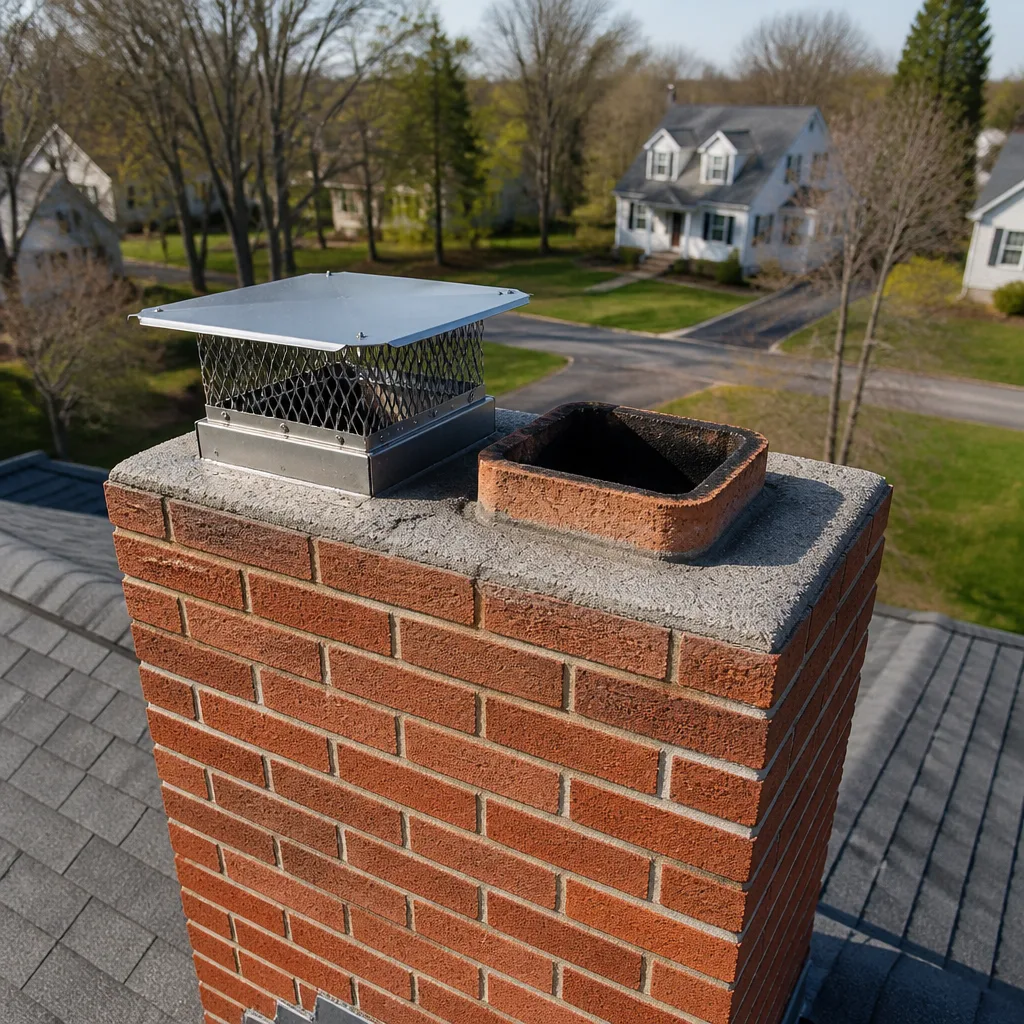
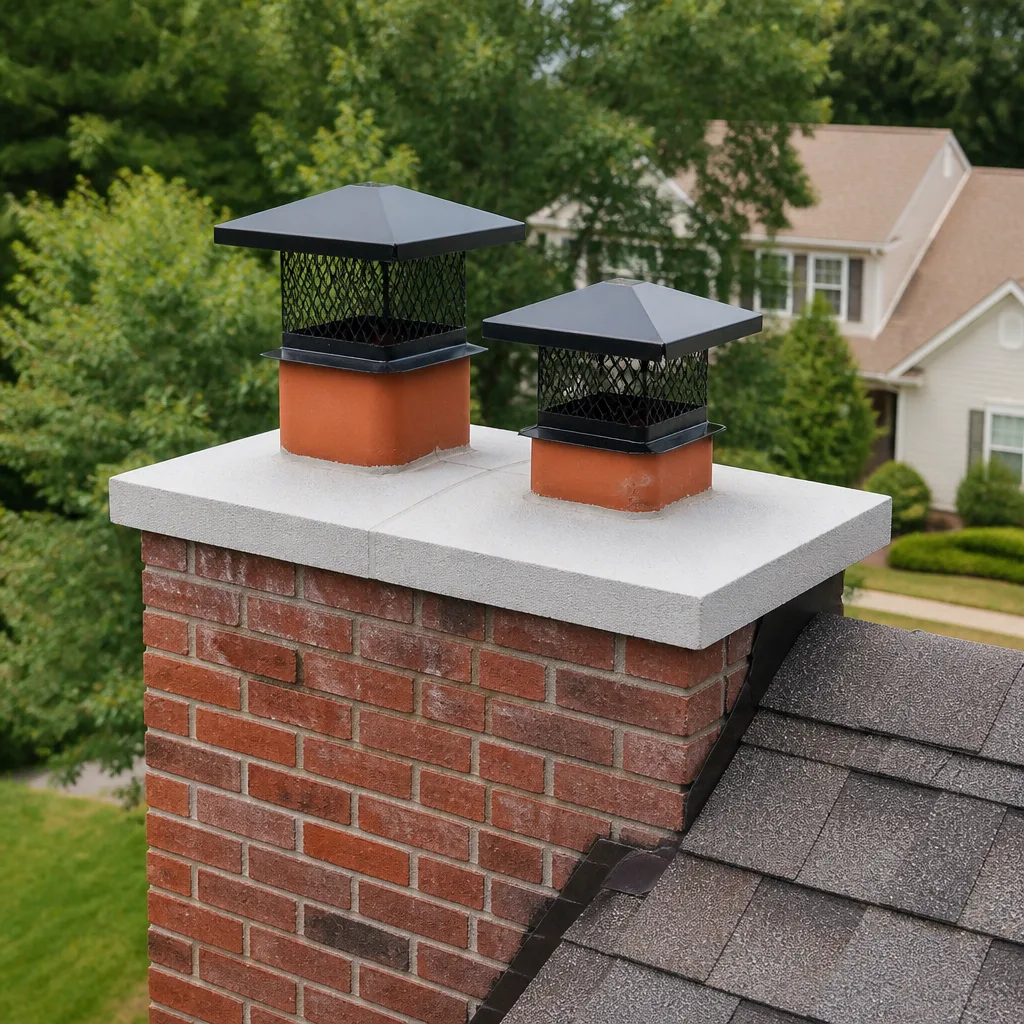 Caps & crowns
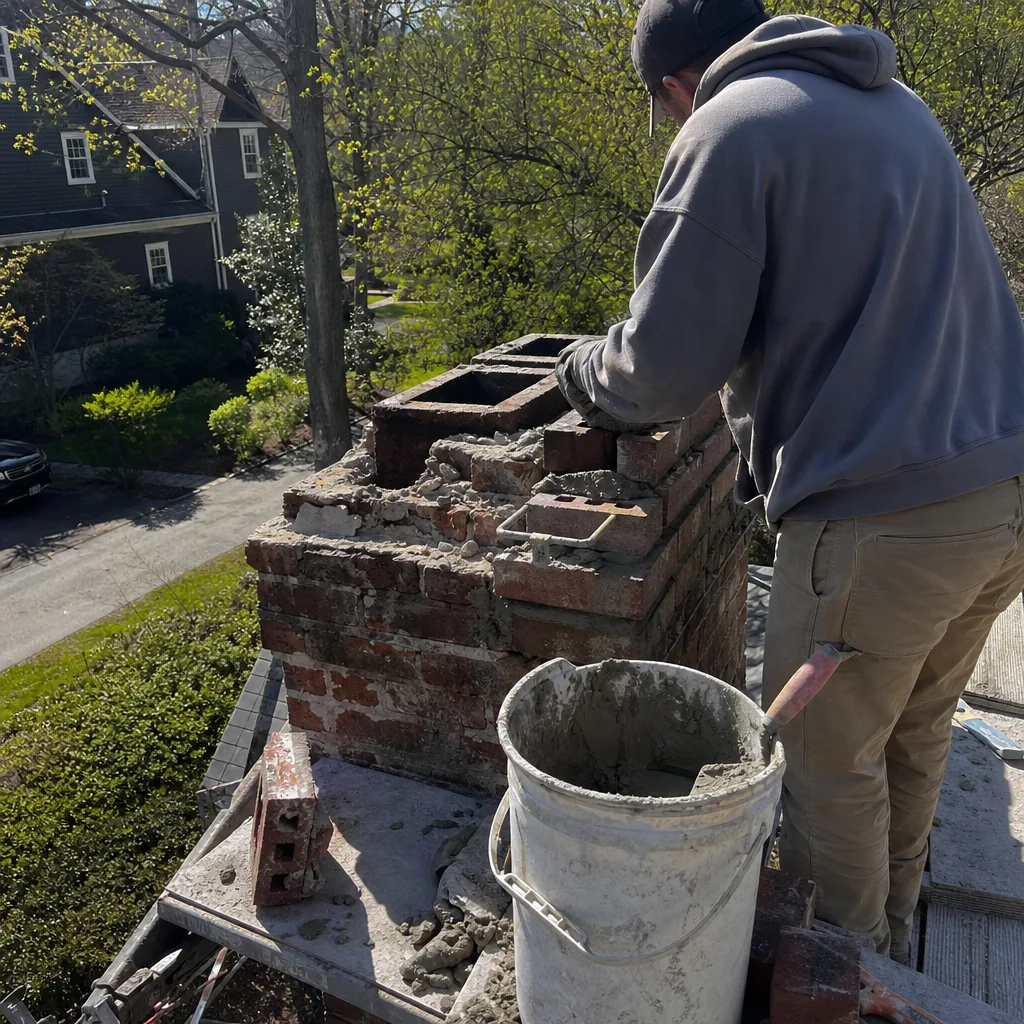
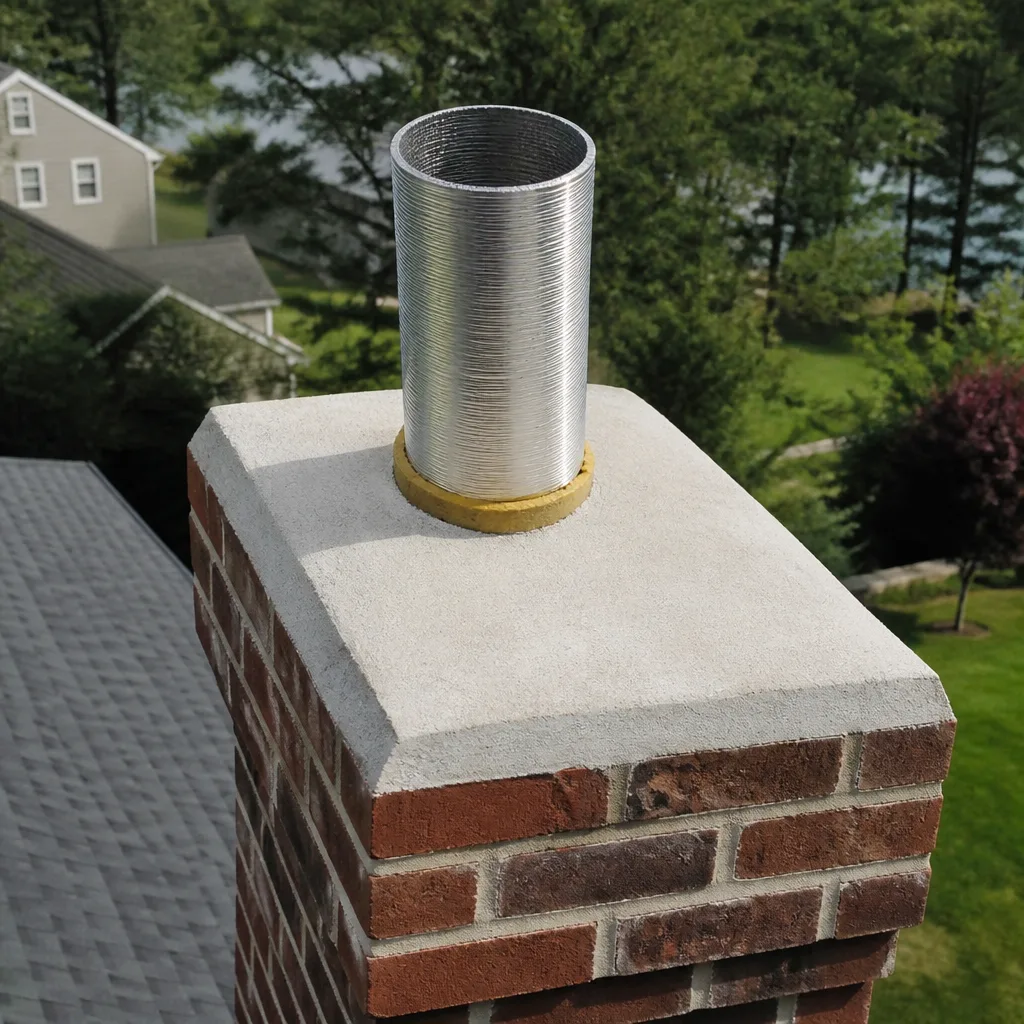 Flue relining
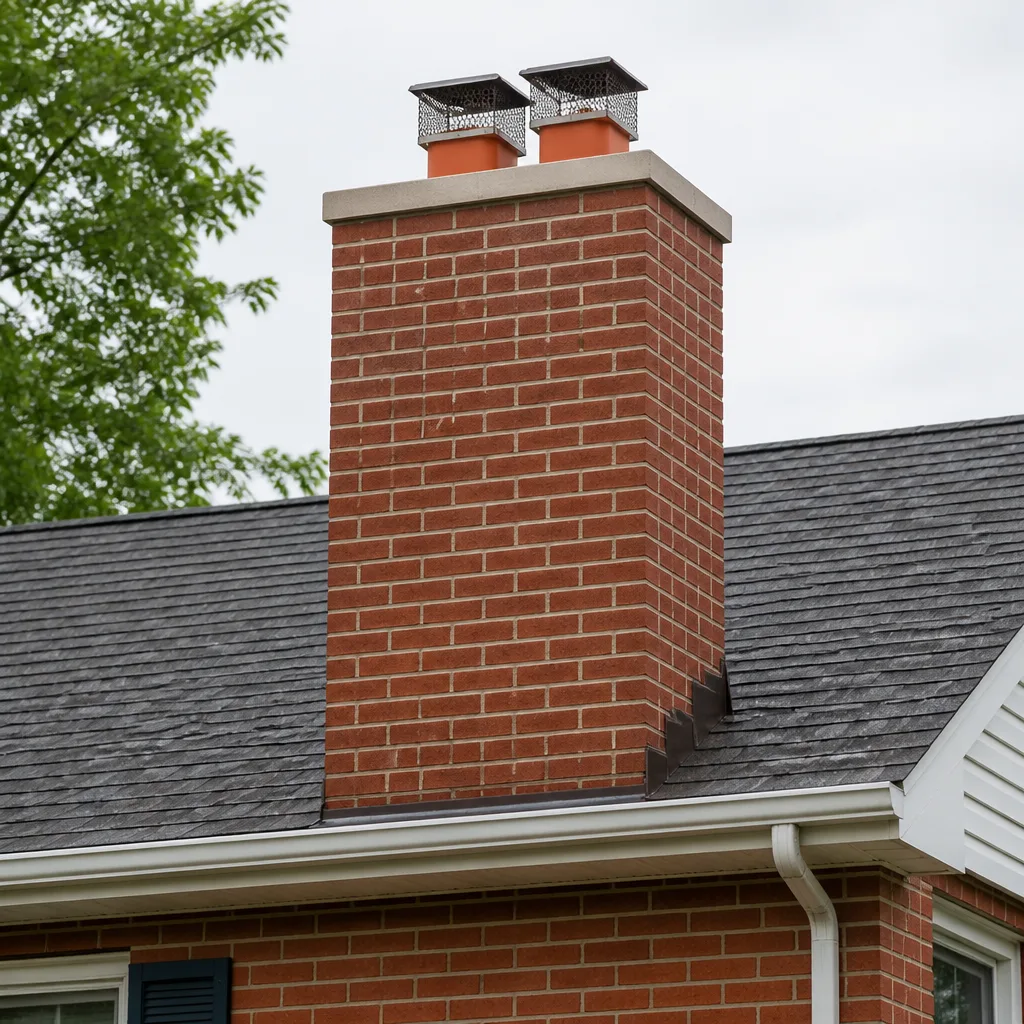 Masonry repair
 Gas fireplace service
Level 1 sweep and inspection to the NFPA 211 annual standard - flue, crown, cap, and flashing checked and photographed
Chimney sweep logs do not sweep chimneys. They loosen some creosote - which then falls where a brush and vacuum still have to collect it.
DIY vs Professional Chimney Cleaning: The Hayes Barton Homeowner’s Decision Guide
Most DIY chimney cleaning advice online assumes one thing: that the brush reaches the problem. It usually doesn’t. A consumer brush kit cleans the straight run of flue above the firebox, but it can’t reach the smoke chamber above the damper, and that’s where the worst creosote tends to collect in a working fireplace. We’re a chimney and fireplace specialist, and we’d rather you understood exactly what a brush kit can and can’t do than hand you a blanket “always hire a pro” line you’ll ignore anyway. This guide walks Hayes Barton homeowners through the real anatomy of a chimney, the narrow conditions where DIY makes sense, the liability question nobody talks about, and a decision matrix for this season.
Quick Answer
DIY chimney cleaning is reasonable only when you have a straightforward masonry flue, light soot rather than glazed creosote, a recent professional inspection on record, and the right rods, brushes and PPE. For most Hayes Barton homes, especially older ones with clay tile liners and deferred maintenance, a professional sweep is the safer and often cheaper choice, because it comes with a camera inspection and a written record your insurer will want if anything goes wrong.
Styles & brands we work with
- Sweep & inspection
- Caps & crowns
- Flue relining
- Masonry repair
- Gas fireplace service
Table of Contents
- What a DIY Cleaning Physically Reaches (and Doesn’t)
- The Narrow Conditions Where DIY Makes Sense
- The Liability Question: Insurance and Self-Serviced Chimneys
- Equipment Cost Reality: What Safe DIY Actually Requires
- Decision Matrix: DIY or Call a Specialist This Season?
- How a Professional Cleaning Actually Differs
- Water, Caps and Crowns: The Hayes Barton Weather Angle
- Common Mistakes to Avoid
- When to Call a Professional
- Frequently Asked Questions
What a DIY Cleaning Physically Reaches (and Doesn’t)
A chimney isn’t one tube. It’s a stack of components, and each one collects a different kind of deposit. A brush kit passes through some of these and misses others entirely, which is why a “clean” flue after a DIY sweep can still be a risky flue.
Here’s how the system breaks down, from the fire to the sky:
- Firebox: the steel or masonry box where the fire burns. Brush kits don’t clean this well; it needs scraping and vacuuming.
- Damper and smoke shelf: the metal plate and ledge just above the fire. Creosote and soot settle here constantly. A brush passes by it, not through the corners.
- Smoke chamber: the tapered space between the damper and the flue. This is the critical gap. It’s wider at the bottom than the flue above, so a round brush sized to the flue doesn’t contact the walls. Stage-two glazed creosote often forms here, and so do the highest-risk ignitions.
- Flue: the vertical run. This is what your brush kit actually cleans, and it does a reasonable job if the brush is sized correctly.
- Crown and cap: the top of the system. DIY kits don’t address these at all, and they’re where water gets in.
That smoke chamber gap is the single biggest reason we treat DIY cleaning as an interim measure rather than a substitute. A homeowner can push a brush from the roof down or from the firebox up, but neither route gives direct access to that tapered space. Professional cleaning uses specialized smoke chamber brushes and, in many cases, resurfacing products. HeatShield is one we work with that can smooth and restore a pitted smoke chamber or flue without a full reline, provided the damage is caught early.
If you’re in a 1920s or 1930s bungalow in Hayes Barton with a clay tile liner, the tiles themselves add another layer. Cracked or spalled tiles hide behind soot, and a brush kit will never tell you they’re there. A camera inspection does.
The Narrow Conditions Where DIY Makes Sense
We’re not going to tell you DIY is always wrong. It isn’t. There’s a specific set of conditions where a homeowner who is careful, properly equipped and physically able can clean their own flue as an interim measure between professional sweeps. Here they are, and they all need to be true at once.
- The appliance is a straightforward open fireplace or a modern wood stove with a straight flue. No offsets, no inserts with baffles, no pellet appliances with augers and exhaust fans.
- The fuel is well-seasoned hardwood. If you’re burning green wood, softwood scraps or anything treated, you’re producing the kind of creosote a brush won’t remove, and DIY isn’t appropriate.
- Deposits are light soot or stage-one creosote (flaky, soot-like, easy to brush). Stage-two glazed creosote is sticky and hard; stage-three is a shiny, hardened glaze. Either of those means professional cleaning and often resurfacing.
- You have a professional inspection on record from the last year. The inspection tells you the liner is sound and there’s no hidden damage. Without it, you’re brushing blind.
- You burn fewer than roughly a cord of wood a season and sweep at least annually. Heavier use pushes you toward a professional schedule.
- You’re physically able to work on a roof or reach the firebox safely. Roof work is the part most homeowners underestimate. More on that below.
If any one of those fails, DIY moves from “reasonable interim measure” to “risk you’re taking without knowing the odds.” For a lot of Hayes Barton homes, particularly older properties where chimney maintenance has been deferred across several owners, at least one of these conditions fails. If you want a baseline before deciding, a chimney sweep with a camera inspection gives you the information you need to make the call honestly.
The Liability Question: Insurance and Self-Serviced Chimneys
Here’s the part tutorials skip. If a chimney fire happens and your insurer investigates, one of the first things they’ll ask for is documentation of maintenance and inspection. If the chimney was self-serviced with no records, the claim can get complicated in ways that have nothing to do with who was at fault.
We can’t tell you what your specific policy says, and we won’t pretend to. What we can tell you is how these claims usually get questioned:
- Maintenance records. A professional sweep produces a written report with photos. That’s evidence the chimney was maintained. A DIY cleaning produces nothing unless you document it yourself, and self-made records carry less weight.
- Cause of loss. Insurers want to establish whether a fire started from a defect the homeowner should have caught. An inspection finds defects. A brush kit does not.
- Code and standard compliance. Most home insurers reference maintenance standards when assessing claims. A professional report ties your chimney to those standards; a DIY job doesn’t.
- Prior knowledge. If an inspection flagged a cracked liner and the homeowner kept burning, that’s a very different claim conversation than a chimney that was inspected and cleared.
The honest takeaway: DIY cleaning doesn’t automatically void a claim, but it removes the paper trail that makes a claim straightforward. If you’re going to do any of this yourself, keep dated records and photos, and get a professional inspection at least once a year. That combination is what protects you.
Equipment Cost Reality: What Safe DIY Actually Requires
Online brush kits cost less than a professional sweep. That’s true. What those kits don’t include is the equipment that makes the job safe and actually effective, and the gap between the two is wider than most homeowners expect.
Here’s what a genuinely safe and effective DIY cleaning setup looks like:
- Polished polypropylene rods sized to your flue, in the right length to reach top to bottom. Cheap fiberglass rods can crack and shed.
- A brush correctly sized to the flue interior. Too small and it doesn’t contact the walls; too large and it can damage a clay liner.
- A smoke chamber brush with the right angle for the tapered space above the damper. Most kits don’t include one.
- A HEPA-rated shop vacuum rated for fine soot, not a household vacuum.
- Respiratory protection (N95 or better), eye protection, gloves and coveralls.
- A roof-safe access setup: a stable ladder, a roof harness on pitched roofs, and a way to stay off wet or icy surfaces.
- Drop cloths and sheeting to contain the soot that will get into the room.
Add that up and the entry-level kit looks like the cheap part of the job. If you already own a proper shop vacuum and roof gear, DIY is genuinely economical. If you’re starting from a $40 kit and a stepladder, you’re not equipped, and the roof access is the part that worries us most. Falling off a roof to clean a flue is a far worse outcome than the chimney fire you were trying to prevent.
On the professional side, a company that handles the full system – firebox to crown – uses specialized equipment you can’t reasonably buy, including rotary cleaning heads and camera systems. That equipment is why a professional sweep can tell you what’s inside your flue, not just that it’s been brushed.
Decision Matrix: DIY or Call a Specialist This Season?
Use this as a starting point. It’s not a substitute for an inspection, but it’ll tell you which way to lean before you spend any money.
- Chimney age and liner type: Pre-1960 masonry with a clay tile liner and no recent inspection – call a professional. Any liner you can’t identify – call. Modern factory-built appliance with a straight flue and a clean inspection on record – DIY is reasonable.
- Usage pattern: A fire most nights through the cold months – professional sweep annually, DIY as a mid-season touch-up if you’re equipped. Occasional weekend fires – DIY may hold you for a season if deposits are light.
- Last professional inspection: Within the last year and clear – DIY is a reasonable interim step. Over a year, or never – call for an inspection first, then decide. If you’ve had a chimney fire of any size – call immediately, regardless of anything else.
- What you can see: Flaky, dry soot – brushable. Sticky, tar-like or shiny glaze – professional. Cracks, spalling or staining – professional.
- Water intrusion: Staining on the chimney breast or a damp firebox – call. The cleaning isn’t the real problem.
If you’re on the fence, an inspection is the honest starting point. We inspect first and recommend second, and if the answer is “nothing to do right now,” that’s what you’ll hear. A chimney cap & crown that’s failing is another common issue in Hayes Barton homes, and it’s often the reason a chimney is damp and hard to diagnose from the inside.
How a Professional Cleaning Actually Differs
A professional sweep isn’t just a bigger brush. It’s a different process, and it’s worth knowing what you’re actually paying for so you can judge whether it’s worth it.
- Inspection first. Before any cleaning, we check the firebox, damper, smoke chamber, flue and cap. If the liner is compromised, cleaning could make it worse, so we know that before touching it.
- Containment. Drop cloths, HEPA vacuums and a sealed work area. You shouldn’t be able to smell soot in your living room after we leave.
- Systematic cleaning. Firebox scraped, smoke shelf cleared, smoke chamber brushed with the right tools, flue cleaned from top down or bottom up depending on access.
- Camera inspection. A camera shows the interior of the flue, including the parts you can’t see from either end. This is where we find cracked tiles, gaps and glazed creosote.
- Photo report. You get a written report with photos, so you know exactly what was found and what, if anything, needs doing.
- Recommendations, with evidence. Nothing is recommended without a photo you can see for yourself, and we’ll tell you plainly when something can wait.
That documentation is the part DIY can’t replicate, and it’s what your insurer wants if a claim ever comes up. It’s also what makes a professional sweep a worthwhile annual routine rather than a one-off expense.
Water, Caps and Crowns: The Hayes Barton Weather Angle
Hayes Barton’s climate does more damage to chimneys than most homeowners realize. Hot, humid summers followed by wet winters and the occasional cold snap push moisture into masonry, and once it’s in, freeze-thaw cycles open cracks wider. A chimney that’s cracked and damp also behaves differently under fire, because moisture in masonry changes how heat moves through it.
What that means for the DIY decision: even if you can clean your own flue, you can’t easily address the water problem from inside. The crown (the concrete top that sheds water off the chimney) and the cap (the screened cover that keeps rain and animals out) do that work, and both fail over time. Cracked crowns, gaps at the cap, and missing spark screens are three of the most common issues we find on Hayes Barton chimneys.
If you’re doing a DIY sweep and you notice staining on the chimney breast, a rusty damper or a damp firebox, put the brush down and get the crown and cap looked at. Water damage compounds, and the repair is much cheaper before the freeze-thaw cycles have opened the masonry up. That’s the preventive angle most generalist services skip, and it’s exactly the frontline defense we build our maintenance recommendations around.
See the difference
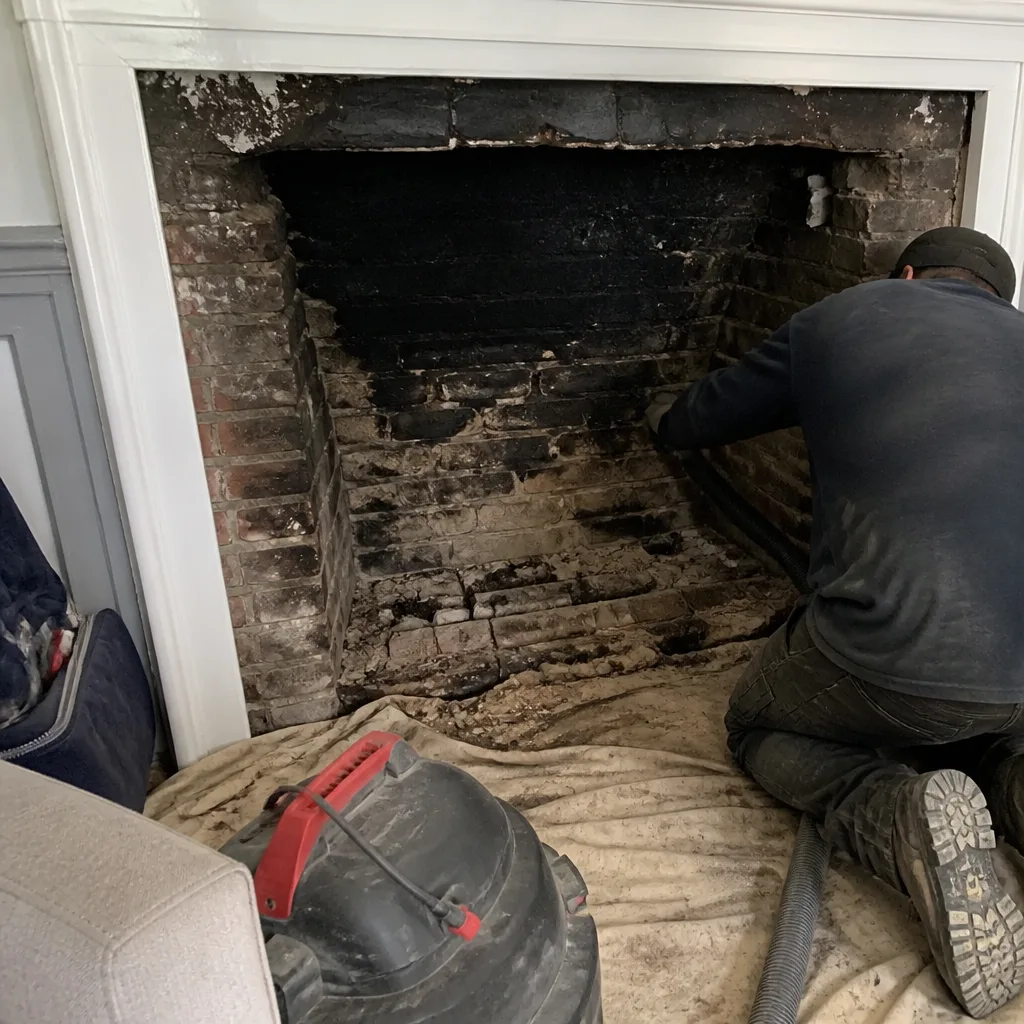 Before
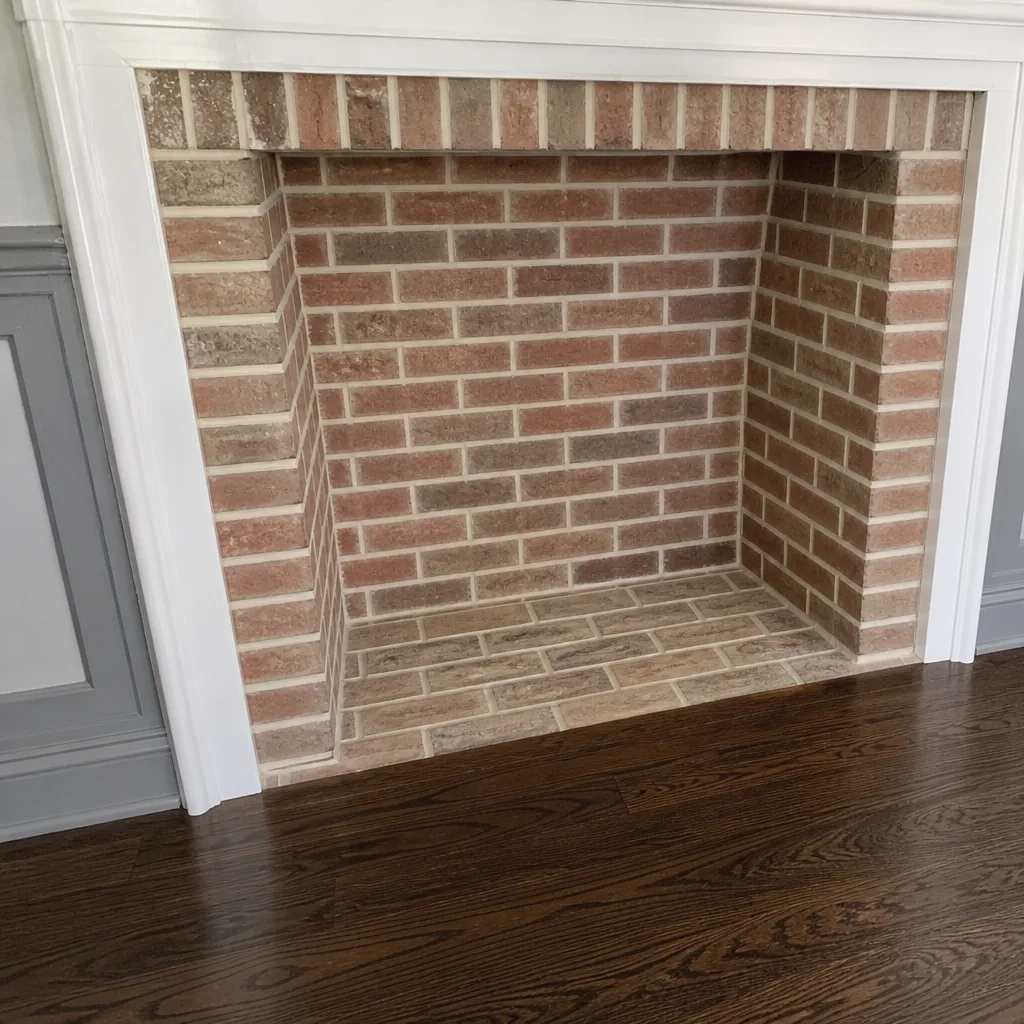 After
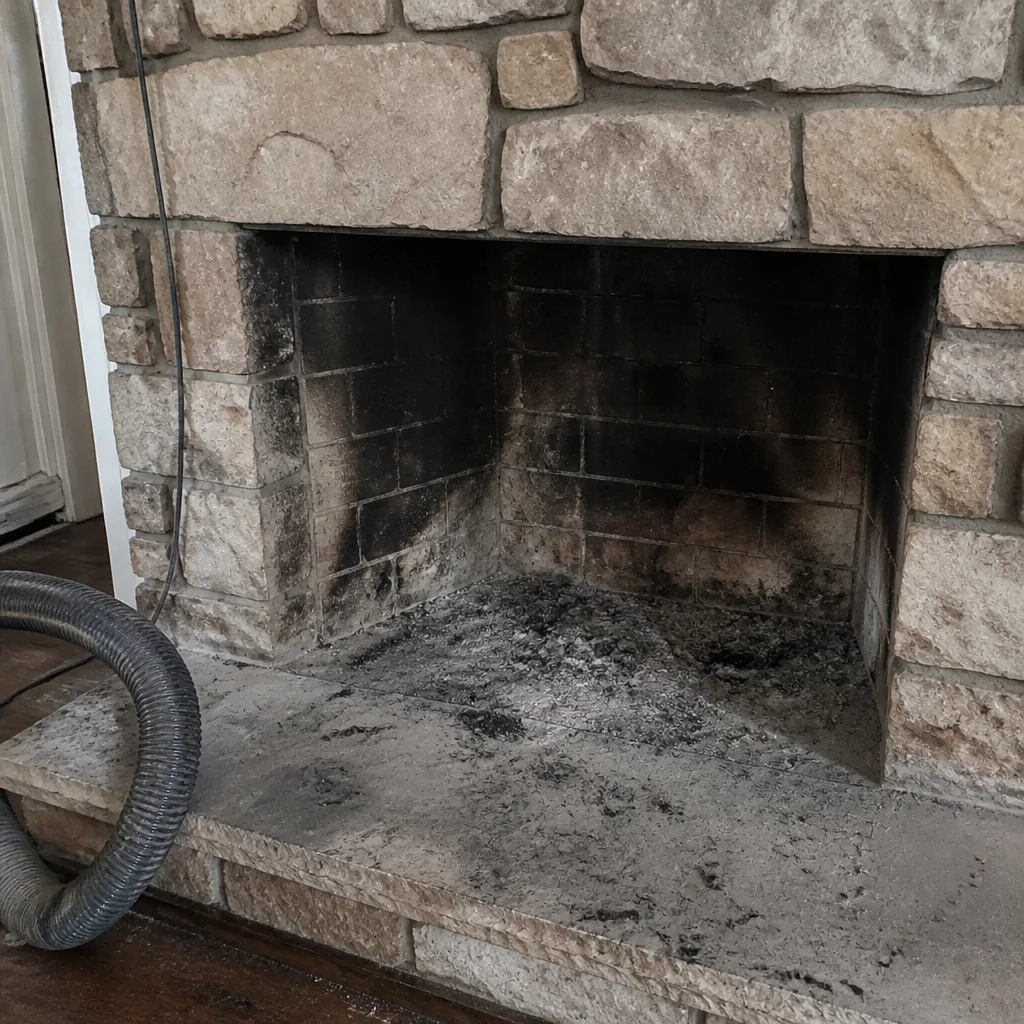 Before
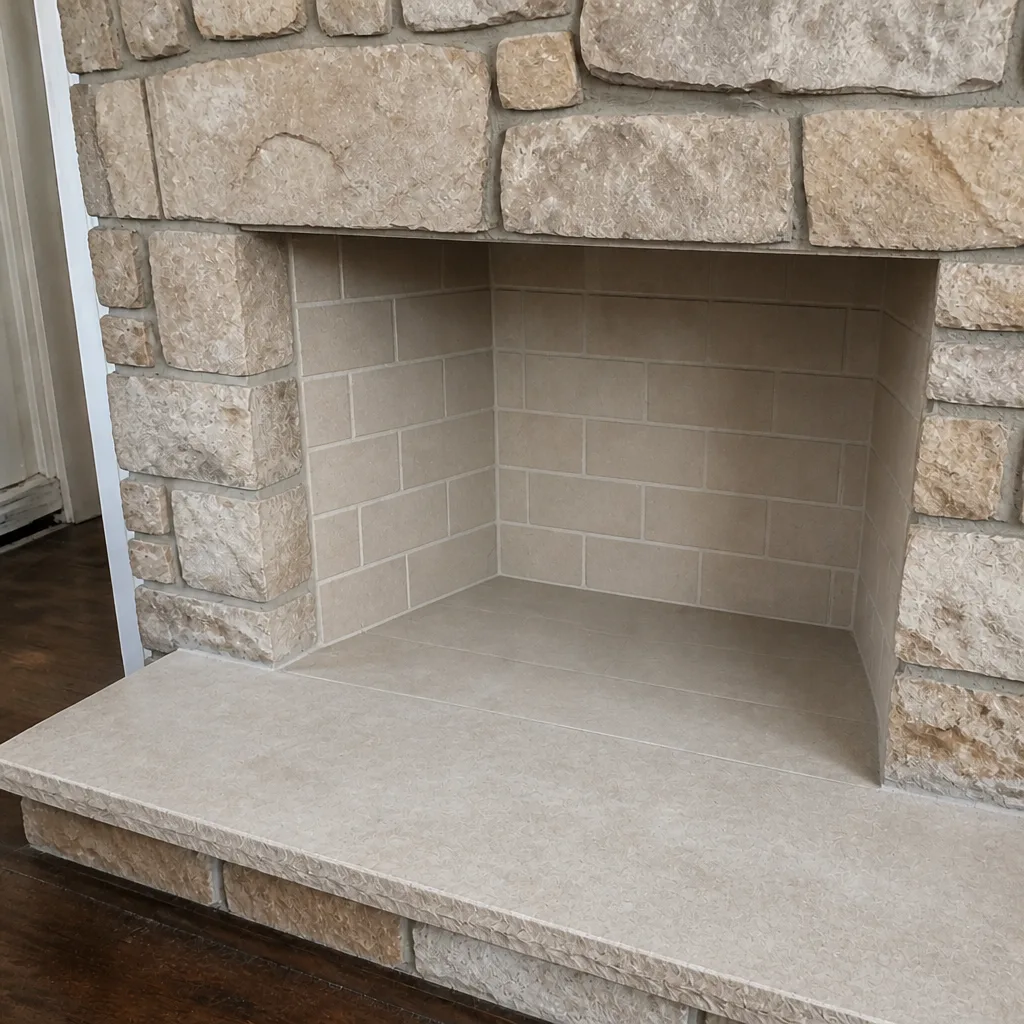 After
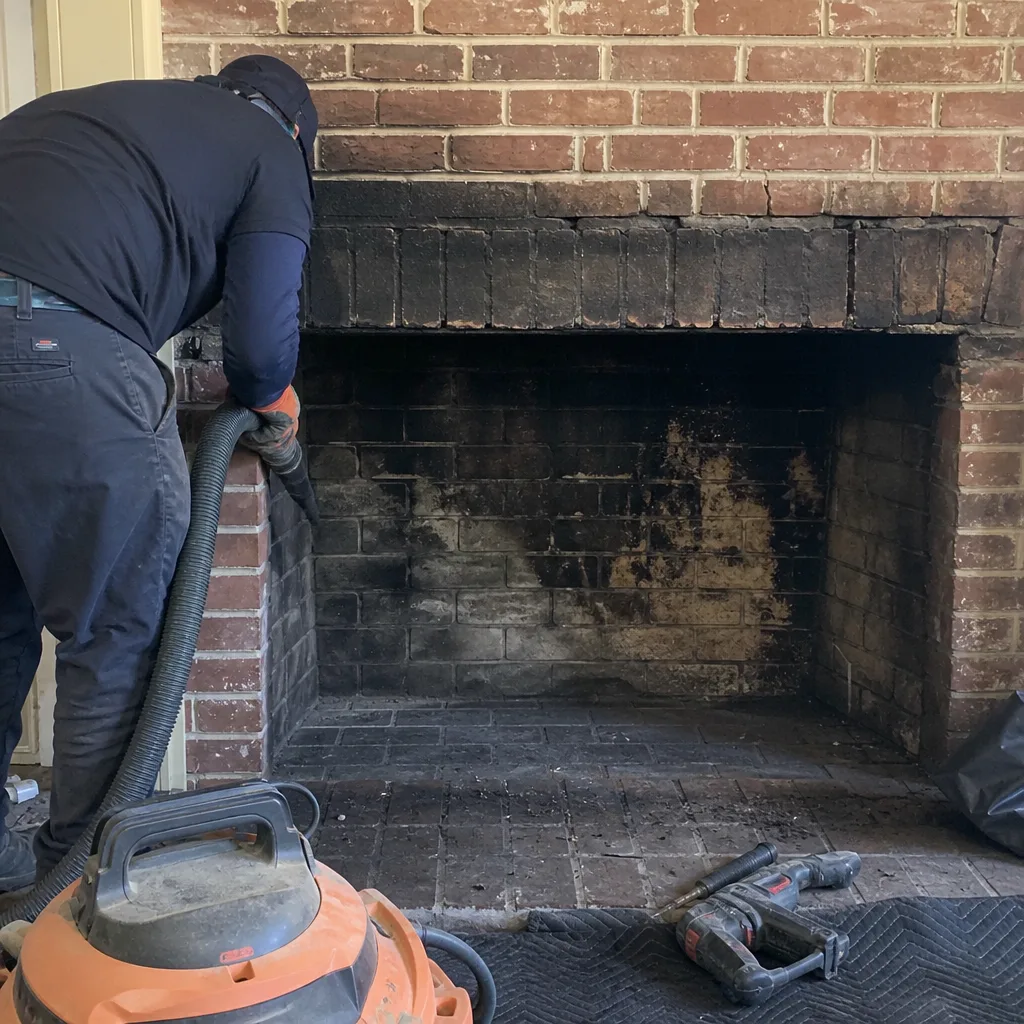 Before
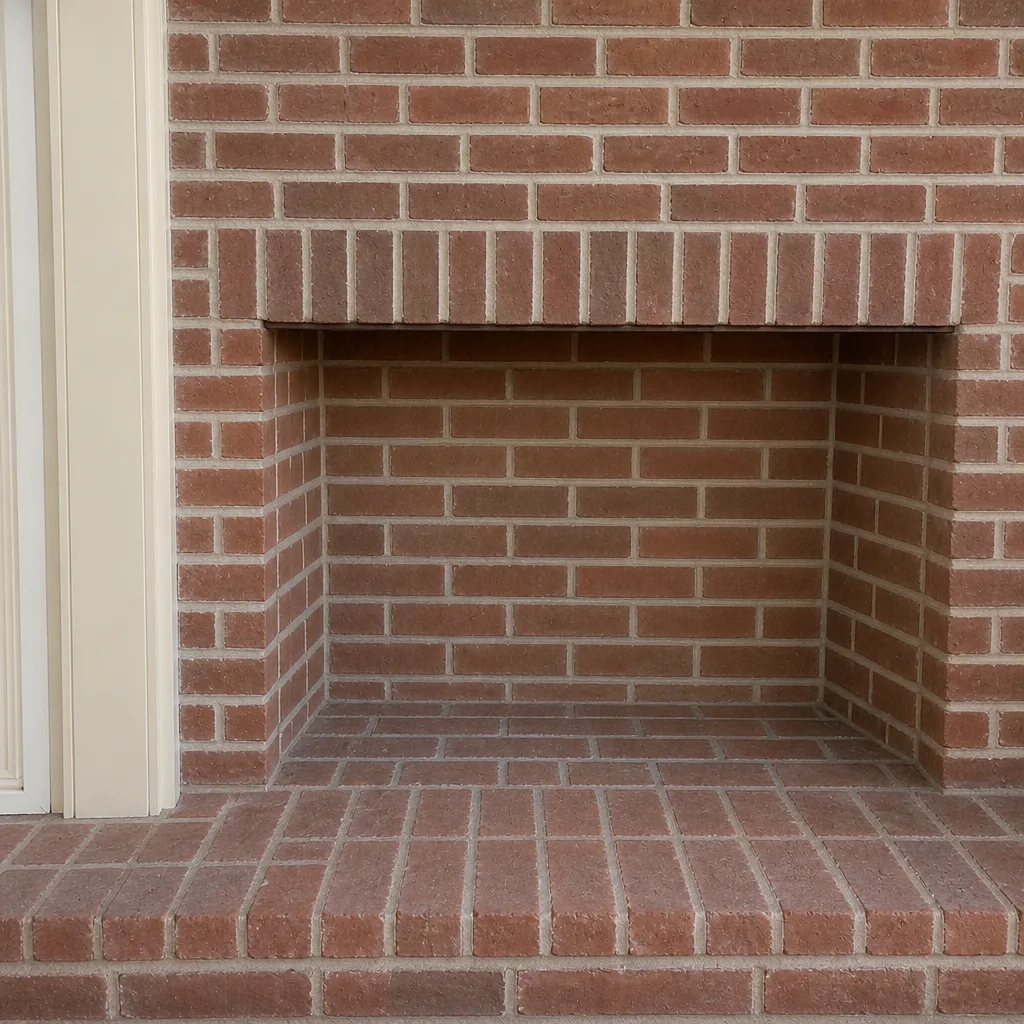 After
Common Mistakes to Avoid
- Cleaning without an inspection first. Brushing a flue with a cracked liner can make things worse. Get the inspection on record before you touch a brush, especially in older Hayes Barton homes where the liner condition is unknown.
- Skipping the smoke chamber. It’s the most overlooked part of the system and the highest-risk ignition point. If your brush kit doesn’t have a smoke chamber brush, you’re not completing the job.
- Using the wrong-size brush. A brush that’s too large can crack clay tile liners; one that’s too small doesn’t clean the walls. Match the brush to the flue, not to the kit’s marketing.
- Working from the roof without proper fall protection. Most DIY injuries happen on the roof, not in the flue. If the pitch is steep, wet or icy, don’t get up there.
- Ignoring creosote type. Stage-two and stage-three creosote look different from soot and don’t brush off. If it’s sticky or shiny, stop and call someone who can handle resurfacing.
- Not keeping records. A date, a photo and a note about what you found protects you if an insurance question ever comes up. Without it, you’ve lost the main advantage DIY offers.
- Forgetting the cap and crown. A clean flue under a cracked crown will be damp and dirty again by the next season. Address water intrusion at the same time or you’re doing half the job.
When to Call a Professional
Call a specialist this season if any of the following is true: you’ve never had the chimney inspected, it’s been more than a year since the last sweep, you see sticky or shiny creosote, you notice staining or a damp firebox, you’ve had any chimney fire, or your home is older and you don’t have records showing the liner was checked. Same for a fireplace that’s overdue for fireplace repair – a damaged firebox or a failing damper is a repair question, not a cleaning one.
Our technicians have up to 12 years of experience, and we work with professional-grade industry brands including DuraFlex, Gelco, Olympia Chimney and Famco. We offer free estimates in Hayes Barton. Call (855) 658-4229. We answer 24/7. Fast dispatch from 7am to 7pm, Sunday through Friday.
Frequently Asked Questions
It’s safe only under narrow conditions: a sound liner confirmed by a recent inspection, light soot or stage-one creosote, the right equipment, and safe roof access with fall protection. Under those conditions, DIY is a reasonable interim measure between professional sweeps. Outside them, it’s a risk you’re taking without knowing the odds. Call (855) 658-4229 for a free estimate if you’re unsure.
No. Stage-two (sticky, tar-like) and stage-three (shiny, hardened) creosote don’t brush off; they need professional cleaning and often resurfacing. HeatShield resurfacing can restore a damaged smoke chamber or flue without a full reline if the damage is caught early. Call (855) 658-4229 for an inspection and a photo report you can see for yourself.
It can complicate a claim, because it removes the professional inspection and maintenance records an insurer uses to assess a fire. It doesn’t automatically void coverage, but the paper trail matters. Keep dated records and photos if you clean your own flue, and get a professional inspection at least once a year. Call (855) 658-4229 to book one.
Pricing is set per job by a free written estimate, so we won’t quote over the phone without seeing the chimney, but you’ll know the total before any work starts. A professional sweep includes an inspection, camera check and photo report; an entry-level DIY kit costs less but doesn’t cover the smoke chamber or give you the documentation. Call (855) 658-4229 for an exact estimate.
Annually for most homes that burn regularly, more often for heavy fireplace use, and immediately after any chimney fire. The actual schedule depends on how much you burn, the fuel, and what the inspection finds. If it’s been more than a year since your last sweep, an inspection this season is the sensible starting point. Call (855) 658-4229 to book it.
Creosote builds up, glazes, and becomes fuel for a chimney fire; the smoke chamber fills first and is hardest to reach. Carbon monoxide risk also rises if the flue is obstructed or damaged, and water intrusion compounds the damage over time. None of this is a reason to panic; it’s a reason to inspect. Call (855) 658-4229 for a free estimate.
The Bottom Line
DIY chimney cleaning is a defensible interim measure under specific conditions: a sound liner confirmed by a recent inspection, light soot rather than glazed creosote, correct equipment, and safe roof access. Outside those conditions, it isn’t a frugal shortcut; it’s a gap in the paper trail your insurer wants and a blind spot at the smoke chamber, which is exactly where chimney fires are most likely to start. Inspection first, recommendation second, is how we work. If your chimney is overdue for a look, or you want the camera evidence before deciding, a Chimney Sweep Hayes Barton inspection is the honest starting point.
We work with professional-grade brands including DuraFlex, HeatShield, Gelco, Olympia Chimney, Famco and Copperfield, and we handle the full arc from sweep to structural repair. If you’d like a free estimate this season, call (855) 658-4229. We answer 24/7. Fast dispatch from 7am to 7pm, Sunday through Friday.
Written by the team at Chimney Sweep Hayes Barton.